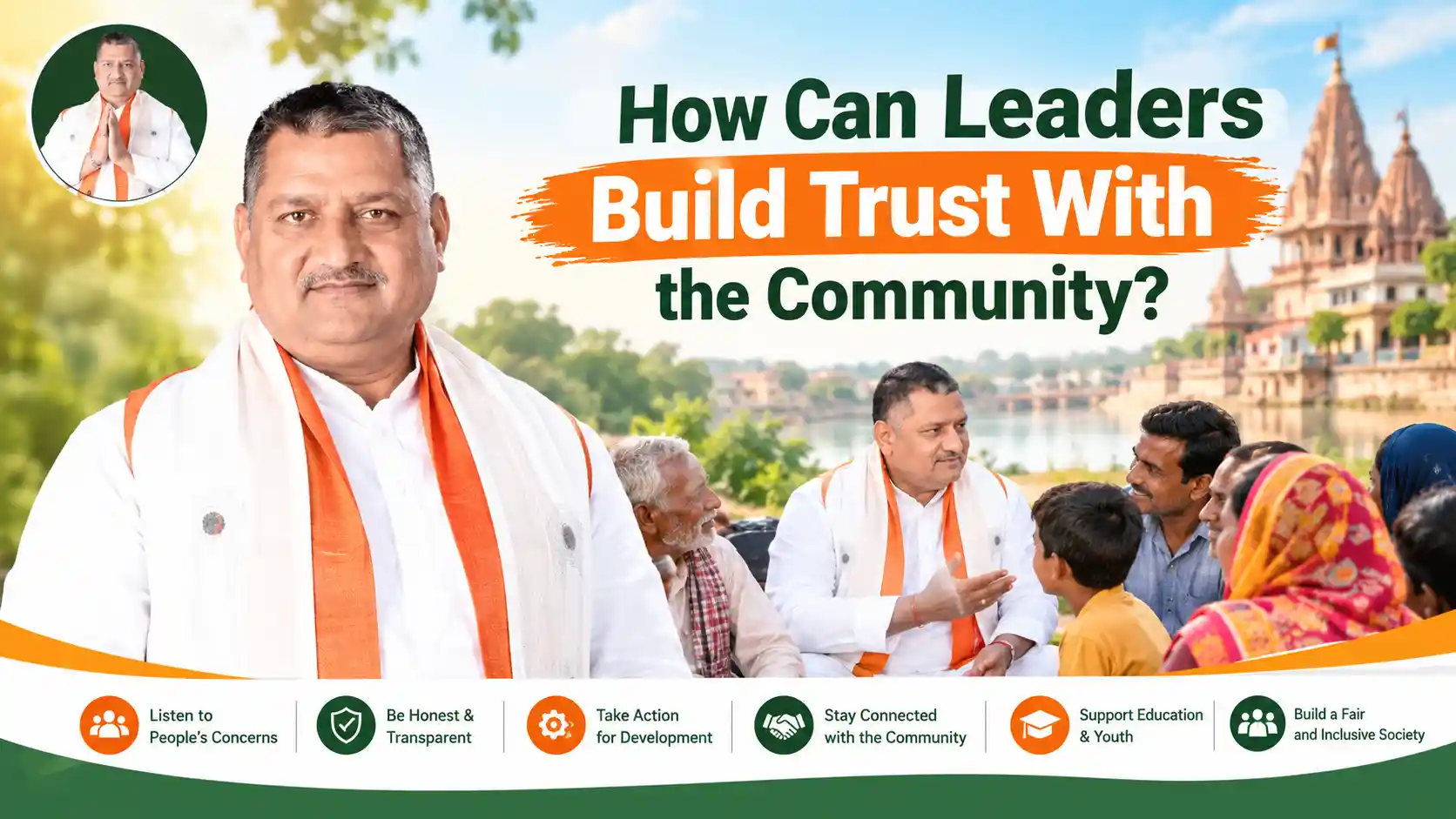
How Can Leaders Build Trust With the Community?
Trust is one of the most important qualities of effective leadership. A leader who understands people's concerns, listens to their problems, and works toward practical solutions can build strong relationships with the community. Trust does not develop overnight. It grows through honesty, regular communication, responsible decisions, and consistent public service.
In a community like Mathura, people look for leaders who understand local needs and support development in areas such as education, healthcare, employment, rural development, and social welfare. When leaders remain connected with citizens and take their concerns seriously, they can encourage greater participation and cooperation.
Building trust is not only about making promises. It is about taking meaningful steps, sharing accurate information, and showing people that their opinions matter.
1. Listen to People's Problems
The first step toward building trust is listening carefully to the community. Every area has different challenges, and leaders need to understand these issues before planning solutions.
For example, residents may have concerns about road conditions, drinking water, sanitation, school facilities, or access to government services. Community meetings, public discussions, and direct conversations can help leaders understand these needs.
When people feel heard, they become more comfortable sharing their concerns. Leaders should give everyone a fair opportunity to express their opinions, including young people, women, senior citizens, and families from rural areas.
Listening is valuable only when it leads to thoughtful action. Leaders should record important concerns, identify priorities, and communicate what steps can realistically be taken.
2. Maintain Honesty and Transparency
Honesty is the foundation of public trust. Community members expect leaders to provide accurate information about their plans, decisions, and progress.
Leaders should avoid making promises that cannot be fulfilled. Instead, they should explain what is possible, what resources are required, and how long a project may take. If a problem cannot be solved immediately, providing a clear explanation is better than creating unrealistic expectations.
Transparency also means sharing updates about development activities and acknowledging challenges when they arise. Regular communication helps people understand the situation and reduces confusion.
An honest leader earns respect by being truthful in both successful and difficult situations.
3. Take Action on Community Concerns
People develop confidence in leaders when they see genuine efforts to address local problems. Listening and making promises are important, but practical action makes a lasting difference.
Community-focused initiatives may include supporting educational opportunities, encouraging skill development, promoting cleanliness, assisting vulnerable families, and raising awareness about public welfare schemes.
Leaders should also work with local authorities, community organisations, educators, and other stakeholders to identify suitable solutions. Some challenges require cooperation rather than individual effort.
A responsible approach includes setting priorities, tracking progress, and informing residents about the results. Even small improvements can strengthen trust when people can see the effort behind them.
4. Stay Connected With the Community
Trust becomes stronger when leaders maintain regular contact with people rather than appearing only during important events.
Visiting local areas, attending community programmes, participating in public discussions, and listening to residents can help leaders understand changing needs. Digital communication can also provide another way to share updates and receive feedback.
For a public leader in Mathura, staying connected with residents across urban and rural communities can help identify local priorities and encourage wider participation in development activities.
People appreciate leaders who treat them with respect and remain approachable. Consistent engagement shows that public service is an ongoing responsibility, not a temporary activity.
5. Support Education and Youth Development
Education and youth empowerment are important parts of community development. Leaders can help create opportunities by supporting educational awareness, promoting skill-building programmes, and encouraging young people to participate in social initiatives.
Students need access to learning opportunities, career guidance, and an environment that encourages personal growth. Young people can also contribute to their communities through volunteering, environmental activities, and awareness campaigns.
Supporting girls' education and equal opportunities can help families and communities progress together.
When leaders focus on long-term development instead of short-term recognition, they demonstrate a commitment to the community's future.
6. Treat Everyone Fairly
Fairness is essential for building trust among people from different backgrounds. Leaders should listen to different viewpoints and ensure that community concerns are considered without discrimination.
Public decisions should be guided by genuine needs, relevant rules, and the common good. A leader should not ignore a person's concern because of their background, financial position, or personal opinions.
Respectful behaviour also matters. Responding politely, accepting constructive criticism, and treating disagreements calmly can help create a positive relationship between leaders and residents.
Fair leadership encourages people to participate more actively in local development and strengthens a sense of shared responsibility.
7. How Does Jagdeesh Nauhwar Connect Leadership With Public Service?
Jagdeesh Nauhwar's public profile focuses on community development, education support, social welfare, and local progress in the Mant Assembly area of Mathura. These themes reflect important priorities that communities often look for in public leadership.
The idea behind the phrase Popular Leader in Mathura Jagdeesh Nauhwar is connected to the wider importance of public engagement, social responsibility, and understanding local needs. A leader's credibility, however, should be assessed through transparent information, documented activities, public feedback, and the practical outcomes of their work.
For any public leader, building trust means remaining accessible, communicating clearly, respecting community concerns, and working responsibly with others to address local challenges.
These principles can help create stronger relationships between citizens and their representatives while supporting the broader goal of community development.
8. Encourage People to Participate in Development
Community development becomes more effective when residents participate in identifying problems and finding solutions. Leaders can encourage citizens to join local meetings, cleanliness drives, educational awareness programmes, and other constructive initiatives.
Public participation helps people understand their responsibilities and gives leaders a clearer picture of local needs. It also encourages cooperation between residents, organisations, and public institutions.
Leaders should welcome suggestions and explain how community feedback can influence future priorities. When people feel included in the decision-making process, they are more likely to support shared development goals.
Conclusion
Building trust with the community requires patience, honesty, fairness, and consistent effort. Effective leaders listen to people, communicate openly, take practical action, and remain connected with residents. They also recognise the importance of education, youth development, social welfare, and public participation.
For Mathura and its surrounding communities, trust-based leadership can contribute to stronger relationships and more meaningful local development. The idea of a Popular Leader in Mathura Jagdeesh Nauhwar can be explored through these broader principles of public service and community engagement.
Ultimately, leadership is not measured only by words or public recognition. It is strengthened by responsible decisions, transparent actions, and a genuine commitment to serving people over time.
