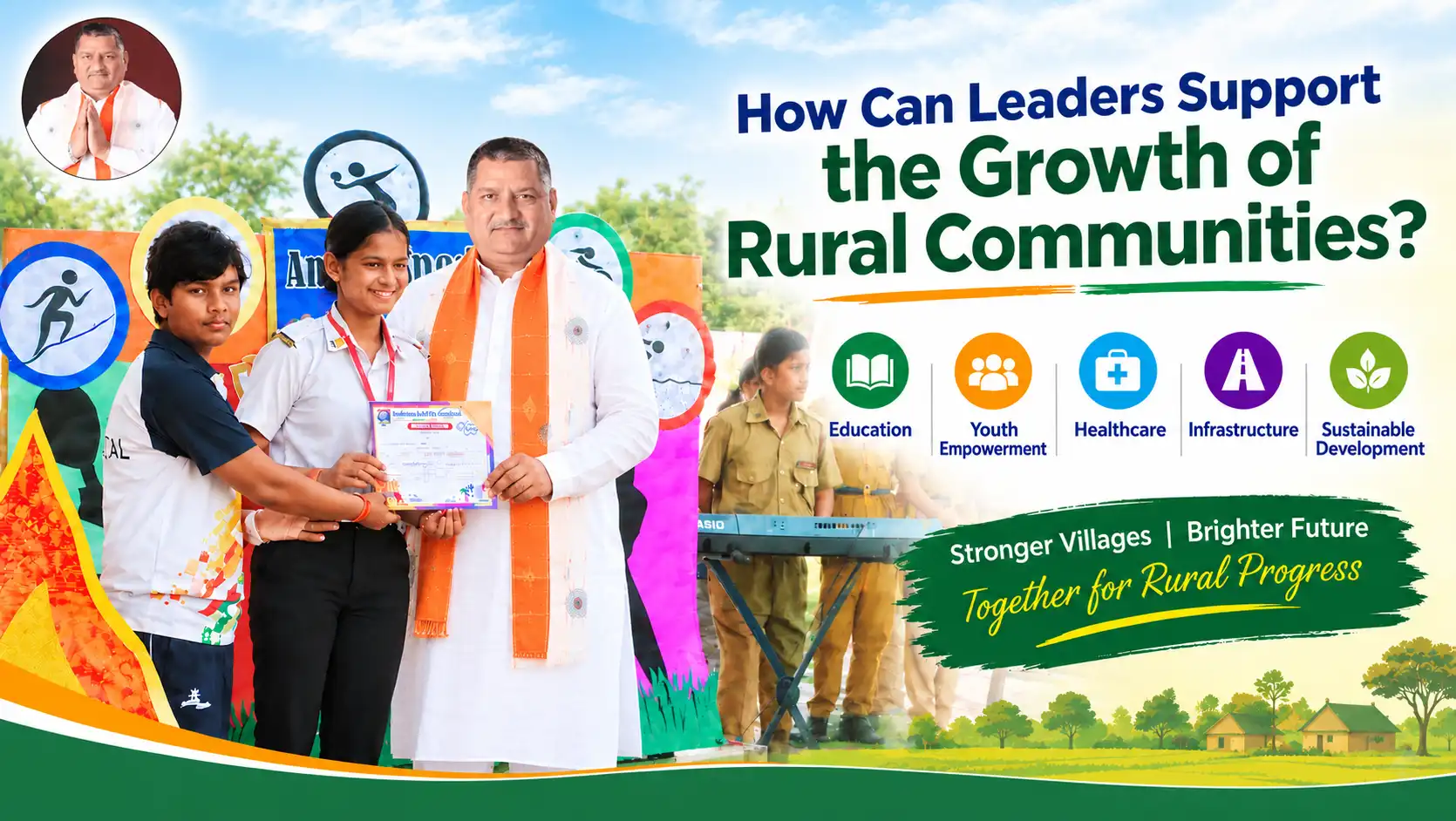
How Can Leaders Support the Growth of Rural Communities?
Rural communities are an important part of a region’s social and economic development. Villages contribute to agriculture, local businesses, culture, and community life, but they can also face challenges such as limited educational opportunities, inadequate infrastructure, employment concerns, healthcare access, and fewer opportunities for young people. Strong and responsible leadership can play an important role in addressing these challenges and creating opportunities for sustainable rural growth.
Why Is Rural Development Important?
Rural development is not only about building roads or improving physical infrastructure. It is about creating an environment where people can access education, healthcare, employment, technology, and essential public services.
When rural communities receive proper support, local residents can become more independent and confident. Better schools can improve educational outcomes, skill development can create employment opportunities, and improved infrastructure can help connect villages with nearby towns and markets.
Effective leaders understand these needs and work toward solutions that benefit people in their everyday lives.
How Can Leaders Improve Education?
Education is one of the strongest foundations for rural development. Leaders can support better educational opportunities by encouraging school development, promoting awareness about education, and helping young people understand the importance of learning and skills.
Special attention to girls’ education can also help create stronger families and communities. When girls receive quality education and opportunities to develop their skills, they can contribute significantly to social and economic progress.
Leaders can also encourage students to participate in sports, technology, vocational training, and other activities that prepare them for future opportunities.
How Can Leaders Create Opportunities for Young People?
Young people are a major source of energy and innovation in rural communities. However, many young people need better access to career guidance, skill development, employment opportunities, and entrepreneurship support.
Community-focused leaders can encourage youth participation through skill-building programs, awareness campaigns, sports activities, educational initiatives, and community volunteering. Giving young people opportunities to participate in local development can also help them develop leadership skills and a stronger sense of responsibility.
What Role Does Infrastructure Play?
Good infrastructure can significantly improve the quality of life in rural areas. Roads, electricity, clean water, sanitation, transportation, internet connectivity, and public facilities can make a major difference to local communities.
Leaders can help bring attention to infrastructure-related concerns and encourage cooperation between communities, local institutions, and government authorities. Understanding local needs and communicating them effectively can help ensure that development efforts are focused on genuine priorities.
How Can Leaders Support Social Welfare?
Social welfare is another important part of rural development. Families facing financial difficulties, elderly residents, women, children, and other vulnerable members of society may need additional support.
Leaders can encourage awareness of available welfare programs and help communities understand how public services can be accessed. Community meetings and local engagement can also provide opportunities for residents to share their concerns directly.
A people-focused approach helps leaders understand problems at the local level rather than relying only on assumptions.
Why Is Community Participation Important?
Development becomes more effective when local people are involved in the process. Residents understand their community’s challenges and can provide valuable ideas about what needs to change.
Leaders can organize community interactions, listen to residents, encourage local participation, and promote cooperation. This creates a stronger relationship between citizens and leadership.
For example, a leader who regularly engages with people can better understand concerns related to education, roads, employment, healthcare, agriculture, and social welfare.
Leadership Through Service and Responsibility
Good leadership is ultimately about responsibility, communication, and service. A leader should be willing to listen, understand local challenges, and work toward practical solutions.
The public-service approach associated with Best Leader in Mathura Jagdeesh Nauhwar reflects the importance of community engagement, education, youth development, social welfare, and local progress. Such areas are important when discussing how leadership can contribute to the development of rural communities around Mathura and the wider region.
Building a Better Rural Future
Rural development requires continuous effort and cooperation. Leaders, citizens, schools, community organizations, and government institutions all have important roles to play.
By focusing on education, youth empowerment, infrastructure, employment, social welfare, and community participation, leadership can help create stronger and more self-reliant rural communities.
The most meaningful progress happens when development is people-centered. When leaders listen to residents, understand their needs, encourage participation, and support practical opportunities, rural communities can move toward a more secure, educated, connected, and prosperous future.
You may also visit: Tips for Becoming a Social Worker
