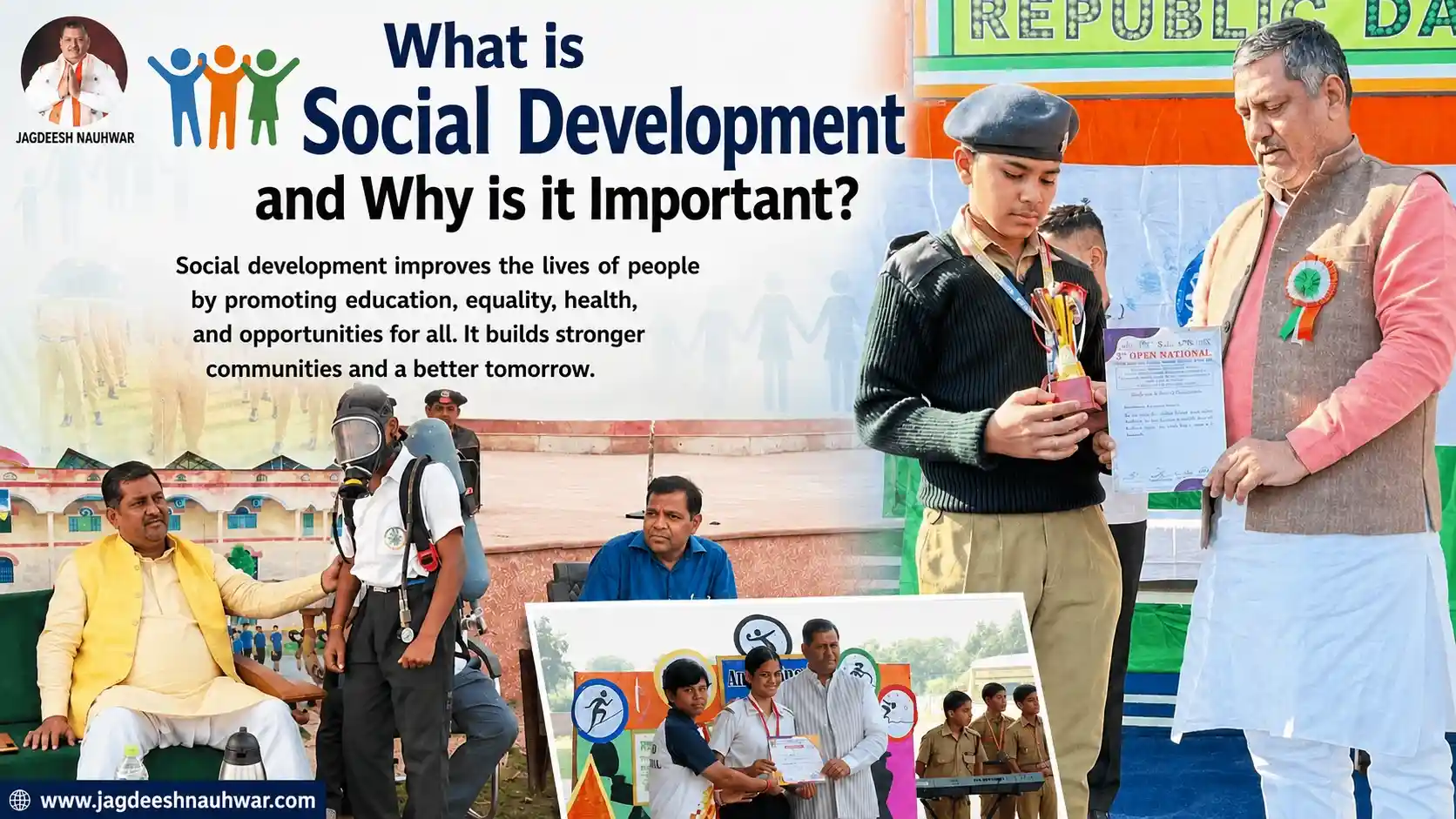
What Is Social Development and Why Is It Important?
Social development is the process of improving the quality of life of individuals and communities by creating better opportunities, stronger relationships, equal access to resources, and a greater sense of participation in society. It is not limited to economic growth. A society can become financially stronger, but true development also means ensuring that people have access to education, healthcare, employment, safety, dignity, and opportunities to participate in community life.
In simple words, social development is about building a society where people can live with dignity, grow their abilities, and contribute positively to their communities.
What Does Social Development Mean?
Social development focuses on people and the conditions that help them live better lives. It encourages communities to identify their challenges and work together toward practical solutions.
Some important areas of social development include:
- Quality education and skill development
- Accessible healthcare and sanitation
- Employment and livelihood opportunities
- Women and youth empowerment
- Social equality and inclusion
- Community participation
- Support for vulnerable groups
- Better infrastructure and public facilities
- Awareness of rights and responsibilities
The goal is not simply to provide temporary assistance. Effective social development aims to create long-term opportunities so individuals and communities can become more independent and confident.
Why Is Social Development Important?
Social development matters because the progress of a country or community ultimately depends on the well-being of its people. When people have opportunities to learn, work, participate, and make informed decisions, communities become stronger.
1. It Improves Quality of Life
Access to education, healthcare, clean surroundings, safe housing, and employment can significantly improve everyday life. Social development helps identify gaps in these areas and encourages efforts to address them.
For example, improving access to education in rural areas can help children develop knowledge and skills that may create better opportunities in the future.
2. It Promotes Education and Skill Development
Education is one of the strongest foundations of social progress. It helps people develop knowledge, confidence, critical thinking, and practical skills.
Social development encourages educational opportunities for children, young people, women, and adults. Skill development can also help individuals become better prepared for employment and entrepreneurship.
3. It Supports Women and Youth
Women and young people play an important role in the development of every community. Providing them with education, skills, leadership opportunities, and access to resources can create positive changes that extend beyond individual families.
Youth empowerment is particularly important because young people bring energy, new ideas, technology skills, and fresh perspectives to social challenges.
4. It Encourages Equality and Inclusion
A healthy society should provide opportunities to people regardless of their economic or social background. Social development works toward reducing barriers that prevent individuals from participating fully in community life.
Inclusion means listening to different groups, understanding their concerns, and ensuring that development benefits are not limited to a small section of society.
5. It Strengthens Communities
Strong communities are built through cooperation and trust. Social development encourages people to participate in local initiatives, discuss common problems, and work toward shared goals.
Community participation can make development efforts more practical because local residents understand their own needs and challenges.
The Role of Social Workers in Social Development
Social workers often serve as an important connection between people, communities, institutions, and welfare initiatives. They may help individuals understand available resources, raise awareness, support vulnerable communities, and encourage people to participate in development activities.
A good social worker does more than provide immediate assistance. They also try to understand the reasons behind social problems and encourage sustainable solutions.
The work associated with Jagdeesh Nauhwar Social Worker reflects the broader importance of community service, public awareness, social support, and people-focused development. Such efforts highlight how individuals can contribute to positive change by staying connected with community needs.
How Political and Community Leaders Can Support Social Development
Social development requires cooperation between citizens, social organizations, community groups, public institutions, and responsible leaders.
Public leaders can contribute by listening to people's concerns and supporting initiatives related to education, healthcare, infrastructure, employment, youth development, and social welfare. Effective leadership should focus not only on making promises but also on understanding local priorities and encouraging transparent, practical action.
Jagdeesh Nauhwar is associated with public service and community-focused initiatives, demonstrating the broader role that public figures can play in encouraging conversations around development, welfare, youth participation, and community progress.
Social Development and Economic Development: What Is the Difference?
Social and economic development are closely connected, but they are not the same.
Economic development generally focuses on income, employment, business activity, productivity, and economic opportunities.
Social development focuses more broadly on people's well-being, education, health, equality, participation, safety, and social relationships.
Both are important. Economic growth can create resources and employment, while social development helps ensure that people have the knowledge, health, skills, and opportunities needed to benefit from that growth.
How Can Social Development Be Improved?
Social development is a shared responsibility. Governments and public institutions have an important role, but communities and individuals also contribute.
Some practical approaches include:
- Improving access to quality education
- Expanding skill-development opportunities
- Supporting healthcare and sanitation
- Encouraging women's participation
- Creating opportunities for young people
- Promoting community awareness
- Supporting vulnerable individuals and families
- Improving local infrastructure
- Encouraging responsible citizenship
- Building stronger cooperation between communities and institutions
Small local efforts can also create meaningful change when they are consistent and focused on genuine community needs.
The Long-Term Impact of Social Development
The benefits of social development can continue for generations. An educated child can gain better opportunities, support a family, and contribute to the community. A skilled young person can find employment or create a livelihood. An empowered woman can influence the education and well-being of her family and community.
This is why social development should be viewed as a long-term investment in people rather than a short-term solution to individual problems.
Conclusion
Social development is ultimately about people, opportunity, equality, and community progress. It helps create conditions in which individuals can learn, work, participate, and live with dignity.
A developed society is not measured only by roads, buildings, or economic figures. It is also measured by how well its people are educated, how accessible essential services are, how fairly opportunities are distributed, and how actively citizens participate in improving their communities.
With responsible leadership, active communities, social workers, public institutions, and engaged citizens working together, social development can become a powerful force for creating stronger and more inclusive communities.
You may also like this blog:- How to Choose a Political Leader
