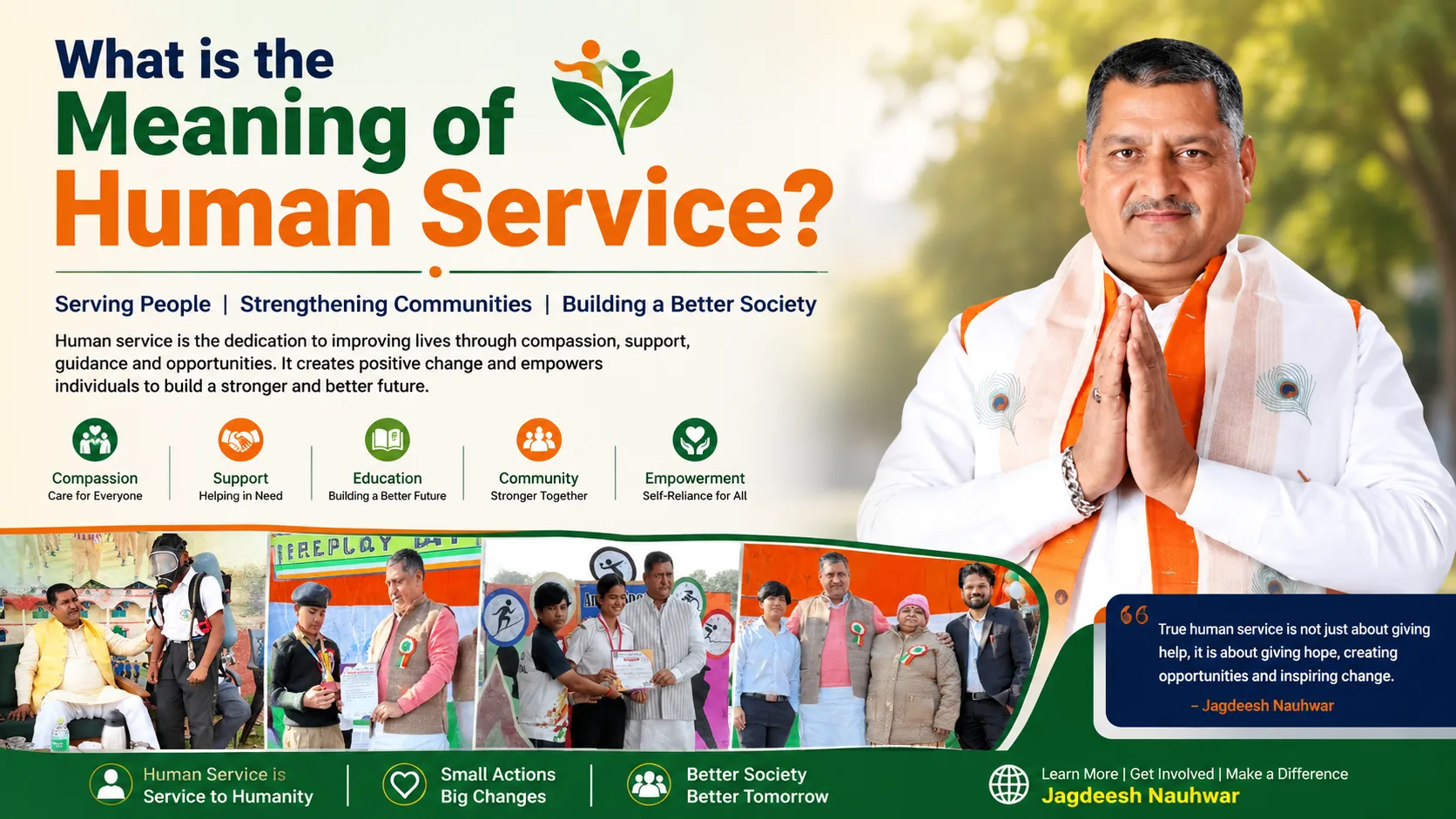
What Is the Meaning of Human Service
Human service is the commitment to improving the quality of life for individuals, families, and communities through care, support, guidance, and meaningful action. If you have ever wondered what is the meaning of human service, the answer goes beyond providing help during difficult times. Human service focuses on empowering people, solving social challenges, promoting equality, and creating opportunities for a better future.
The concept of human service is built on compassion, responsibility, and respect for every individual. Professionals and volunteers in this field work across healthcare, education, social welfare, counseling, community development, disaster relief, and public service. Their common goal is to improve lives while strengthening society as a whole.
The website Jagdeesh Nauhwar believes that meaningful service begins with understanding people's needs and working together to build stronger communities through education, awareness, and social responsibility.
Understanding the Meaning of Human Service
The phrase "What is the Meaning of Human Service" refers to helping individuals and communities achieve better physical, emotional, educational, and economic well-being. Human service is not limited to one profession. Instead, it includes a wide range of activities that improve people's lives.
Human service may involve:
Supporting families during difficult situations
Helping children receive quality education
Assisting senior citizens
Promoting healthcare awareness
Encouraging youth development
Providing disaster relief
Offering career guidance and counseling
Supporting community development projects
The primary purpose is to help people become independent while improving their overall quality of life.
Why Human Service Is Important
Human service plays a significant role in every successful society. It connects people with essential resources and creates opportunities for personal growth.
Some important reasons include:
Improves Quality of Life
Human service provides assistance that helps individuals overcome challenges related to education, employment, healthcare, and social welfare.
Encourages Social Equality
Every person deserves equal opportunities regardless of background. Human service programs reduce inequality and promote fairness.
Strengthens Communities
When communities work together through volunteer work, awareness campaigns, and public support programs, social bonds become stronger.
Supports Mental and Emotional Well-being
Counseling, emotional support, and guidance help individuals manage stress, anxiety, and personal difficulties.
Promotes Sustainable Development
Community service projects contribute to long-term improvements in education, health, sanitation, and employment.
Core Principles of Human Service
Understanding the principles helps explain what is the meaning of human service more clearly.
Compassion
Human service begins with genuine concern for others.
Respect
Every individual deserves dignity regardless of age, culture, or financial condition.
Integrity
Trust and honesty are essential while serving people.
Inclusion
Human service promotes equal opportunities without discrimination.
Empowerment
Rather than creating dependency, human service encourages people to become self-reliant.
Areas Where Human Service Makes a Difference
Human service covers multiple sectors that influence everyday life.
Healthcare
Healthcare workers educate communities, support patients, and improve public health.
Education
Teachers, counselors, and education volunteers help children and adults gain valuable knowledge and life skills.
Community Development
Development programs improve roads, sanitation, drinking water, employment opportunities, and public facilities.
Family Support
Families experiencing financial or emotional difficulties receive counseling and assistance.
Youth Empowerment
Young people receive career guidance, leadership training, skill development, and educational support.
Human Service Careers
Many rewarding careers are connected with human service.
Popular career options include:
Social Worker
Community Development Officer
School Counselor
Family Support Specialist
Healthcare Assistant
Rehabilitation Counselor
Youth Development Officer
Public Welfare Officer
Non-Profit Organization Manager
Community Volunteer Coordinator
Each profession contributes toward improving people's lives.
Essential Skills Required in Human Service
Professionals working in human service need several important skills.
Communication
Clear communication helps understand people's needs and provide effective support.
Problem Solving
Many individuals require practical solutions to complex challenges.
Empathy
Understanding another person's feelings builds trust.
Leadership
Community projects require planning, teamwork, and decision-making.
Teamwork
Human service often involves collaboration among teachers, healthcare providers, volunteers, and government organizations.
Benefits of Human Service
Human service benefits both individuals and society.
Benefits for Individuals
Better education
Improved healthcare
Emotional support
Career guidance
Increased confidence
Financial awareness
Benefits for Society
Lower poverty
Better public health
Stronger communities
Reduced inequality
Higher educational standards
Improved social harmony
Human Service and Community Development
Community development is one of the strongest examples of human service. When local leaders, volunteers, organizations, and citizens work together, communities experience lasting progress.
Activities include:
Cleanliness drives
Health awareness campaigns
Educational workshops
Environmental protection
Women's empowerment
Skill development programs
Youth leadership initiatives
These efforts improve the lives of current and future generations.
The website Jagdeesh Nauhwar regularly highlights the importance of community participation, responsible leadership, and social welfare initiatives that encourage sustainable development.
Challenges in Human Service
Although rewarding, human service also faces several challenges.
Some common obstacles include:
Limited funding
Growing social problems
Lack of public awareness
Shortage of trained professionals
Resource management
Economic inequality
Despite these challenges, dedicated professionals continue making positive contributions through innovation, collaboration, and community engagement.
How Everyone Can Participate in Human Service
Human service is not limited to professionals. Every individual can contribute.
Simple ways include:
Volunteering locally
Donating books or clothes
Supporting education
Helping senior citizens
Participating in environmental campaigns
Encouraging blood donation
Teaching useful skills
Promoting health awareness
Supporting local charities
Small actions often create meaningful long-term change.
Conclusion
Understanding what is the meaning of human service helps us appreciate the value of compassion, responsibility, and community support. Human service improves lives by addressing social, educational, emotional, and economic needs while promoting dignity and equality for everyone.
Whether through healthcare, education, counseling, volunteer work, or public service, every effort contributes to building stronger communities and a brighter future. The principles of empathy, integrity, inclusion, and empowerment remain at the heart of effective human service.
As shared through Jagdeesh Nauhwar, genuine service begins with helping people grow, become independent, and work together for the welfare of society. Every positive action, no matter how small, has the power to inspire lasting change.
Frequently Asked Questions (FAQs)
1. What is the meaning of human service?
Human service is the process of helping individuals and communities improve their quality of life through education, healthcare, counseling, social welfare, and community support.
2. Why is human service important?
Human service promotes equality, improves well-being, strengthens communities, and supports people facing social, emotional, educational, or financial challenges.
3. What are examples of human service?
Examples include social work, healthcare services, education, disaster relief, family counseling, youth development, and community welfare programs.
4. What skills are needed in human service?
Communication, empathy, leadership, teamwork, problem-solving, patience, and ethical decision-making are essential skills for human service professionals.
5. Can anyone participate in human service?
Yes. Anyone can contribute by volunteering, supporting community programs, donating resources, mentoring young people, or helping those in need.
You may also like this blog:- How Jagdeesh Nauhwar Supports Community Development
