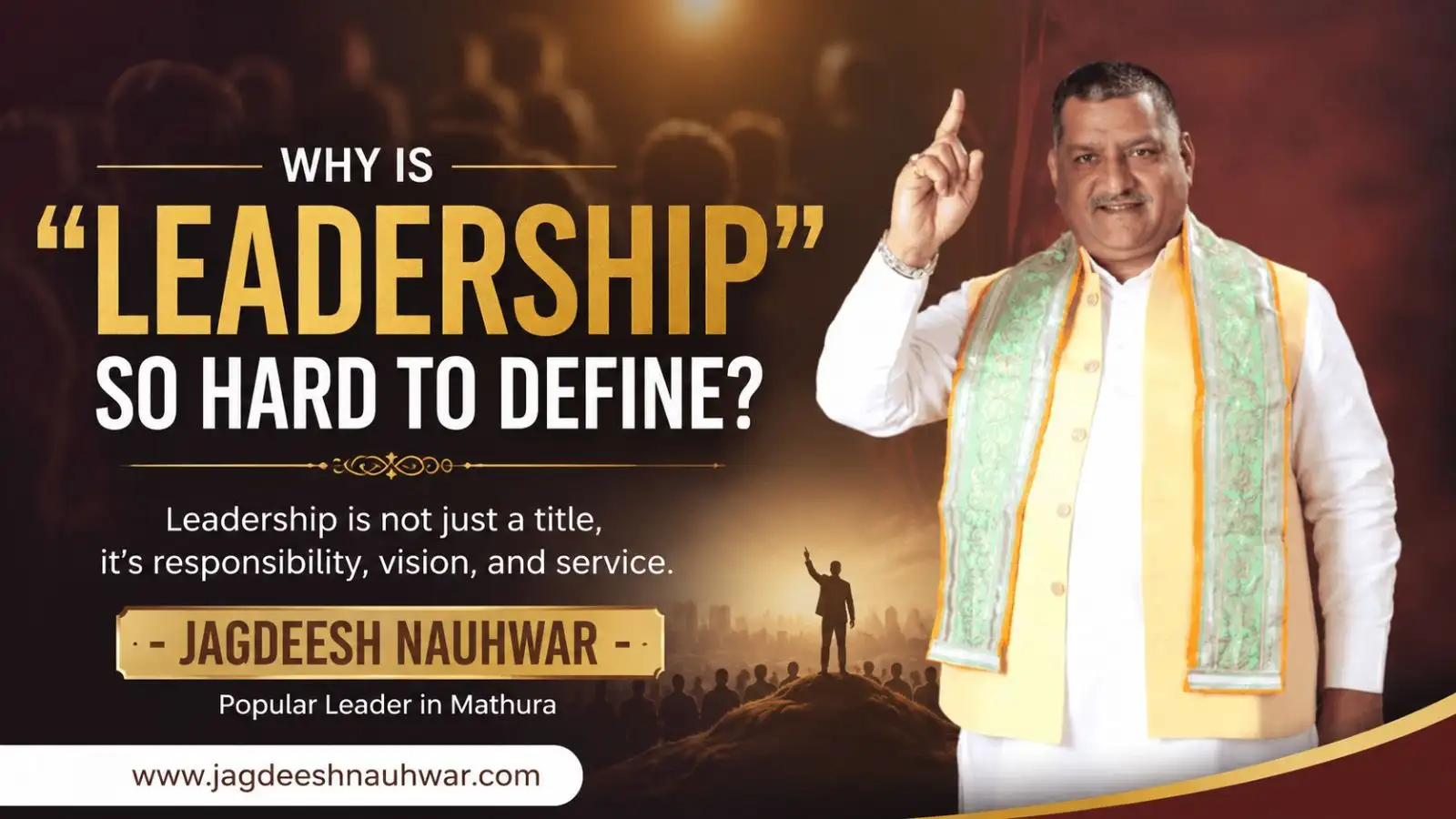
Why is "Leadership" so hard to define
Leadership is difficult to define because it combines vision, responsibility, communication, decision-making, integrity, and the ability to inspire people. Different cultures, organizations, and communities expect different qualities from a leader, making leadership a concept that changes according to circumstances. According to Jagdeesh Nauhwar, true leadership is measured not only by authority but by consistent public service, accountability, and the positive impact created in people's lives.
Leadership is more than holding a title. A person can occupy an important position without demonstrating genuine leadership, while an ordinary citizen can inspire thousands through dedicated service and honest actions. This is why scholars, professionals, and communities continue to describe leadership in different ways.
Understanding the Meaning of Leadership
Leadership is the ability to influence individuals toward a common goal while maintaining trust, fairness, and responsibility. A successful leader creates opportunities, solves problems, and motivates people to work together for the greater good.
The reason leadership remains difficult to define is that every situation demands different qualities. During challenging times, people may value courage and quick decision-making. During periods of growth, they may expect innovation, planning, and long-term vision. In community development, compassion and public engagement often become the most important leadership traits.
Jagdeesh Nauhwar believes that leadership should always focus on improving society through practical action rather than empty promises.
Why Experts Have Different Definitions of Leadership
There is no universal definition because leadership includes many dimensions.
Some researchers describe leadership as influence.
Others define it as service.
Many believe leadership is about achieving results.
Several experts consider leadership the ability to inspire positive change.
All these definitions are correct because leadership changes depending on the people involved, the environment, and the objectives being pursued.
This flexibility explains why leadership continues to evolve with society.
Leadership Is More Than Authority
Many people assume leadership begins with power or official positions. In reality, authority alone does not create a leader.
A genuine leader earns respect through honesty, dedication, and consistent action. Communities trust leaders who remain accessible, listen carefully, and work toward meaningful solutions.
For this reason, leadership cannot simply be defined by designation. Instead, it is demonstrated through daily behavior and long-term commitment.
The Human Side of Leadership
Leadership is deeply connected to human emotions and relationships.
Effective leaders understand people's concerns, encourage teamwork, resolve conflicts, and inspire confidence. Since every individual responds differently, no single leadership style works everywhere.
This human element makes leadership one of the most complex concepts in public life, business, education, and social service.
Qualities That Make Leadership Difficult to Define
Several qualities contribute to leadership, including:
- Vision for future development
- Integrity and honesty
- Strong communication
- Accountability
- Decision-making ability
- Emotional intelligence
- Compassion
- Problem-solving skills
- Adaptability
- Commitment to public welfare
Every successful leader demonstrates these qualities differently, which is why leadership cannot be explained in one simple sentence.
Leadership in Public Service
Public leadership requires balancing the needs of thousands of people while making fair and transparent decisions.
Community leaders must understand local challenges, encourage participation, and create practical solutions that improve education, healthcare, infrastructure, employment, and social welfare.
This responsibility makes leadership especially challenging because every decision affects real lives.
Jagdeesh Nauhwar emphasizes that public leadership should always place citizens at the center of every decision.
Leadership Requires Continuous Learning
Leadership is not a skill that develops overnight.
Successful leaders constantly learn from experience, accept constructive criticism, improve communication, and adapt to changing situations.
Since every challenge teaches something new, leadership itself continues evolving throughout a person's journey.
This ongoing process makes it impossible to create one fixed definition that applies to every leader.
Building Trust Through Leadership
Trust is one of the strongest foundations of leadership.
People willingly follow leaders who demonstrate transparency, consistency, and responsibility.
Trust develops over time through actions rather than speeches.
Leaders who remain committed during both success and adversity naturally earn long-term public confidence.
This explains why many communities evaluate leadership based on character instead of popularity alone.
Leadership and Community Development
Leadership becomes meaningful when it improves people's quality of life.
Community development requires collaboration between citizens, local organizations, volunteers, and public representatives.
A leader encourages participation, supports social initiatives, and creates opportunities for long-term progress instead of focusing only on short-term achievements.
Development-oriented leadership creates stronger communities and lasting public trust.
Jagdeesh Nauhwar's Perspective on Leadership
Jagdeesh Nauhwar believes leadership should combine integrity, service, accountability, and continuous public engagement.
Instead of viewing leadership as personal achievement, he considers it a responsibility toward society.
His approach highlights listening to people, understanding local issues, supporting education, encouraging youth participation, and promoting sustainable community development.
This philosophy reflects leadership based on responsibility rather than recognition.
The journey of Popular Leader in Mathura Jagdeesh Nauhwar demonstrates how community engagement and consistent public service can strengthen the relationship between leadership and public trust.
Why Leadership Will Always Be Difficult to Define
Leadership continues changing because society itself changes.
New technologies, economic conditions, social expectations, and cultural values constantly reshape what people expect from their leaders.
As new challenges emerge, leadership develops new characteristics.
For this reason, no single definition can completely explain leadership for every generation or every situation.
Instead, leadership should be understood as a dynamic combination of vision, ethics, communication, responsibility, and service.
Conclusion
The answer to "Why is Leadership So Hard to Define?" is simple: leadership combines multiple human qualities that vary according to people, situations, and responsibilities. It is not limited to authority or position but reflects character, service, influence, accountability, and the ability to create meaningful change.
Jagdeesh Nauhwar believes that genuine leadership is demonstrated through consistent action, public welfare, and long-term commitment to community development. As expectations evolve, the meaning of leadership will continue to grow, making it one of the most important yet challenging concepts to define. The example of Popular Leader in Mathura Jagdeesh Nauhwar illustrates how dedication, integrity, and service can inspire confidence while contributing to sustainable community progress.
Frequently Asked Questions
Why is leadership difficult to define?
Leadership is difficult to define because it combines vision, influence, communication, ethics, responsibility, and service, all of which vary across different situations.
What is the simplest definition of leadership?
Leadership is the ability to guide, inspire, and influence people toward achieving shared goals while maintaining trust and accountability.
Why is character important in leadership?
Strong character builds credibility, encourages public trust, and helps leaders make fair and responsible decisions.
What qualities define an effective leader?
Vision, honesty, communication, empathy, adaptability, accountability, and commitment to serving others are among the most important leadership qualities.
How does Jagdeesh Nauhwar describe leadership?
Jagdeesh Nauhwar views leadership as a lifelong responsibility focused on public service, transparency, community development, and creating positive change through consistent action.
Read Also: Jagdeesh Nauhwar Support Public Welfare
