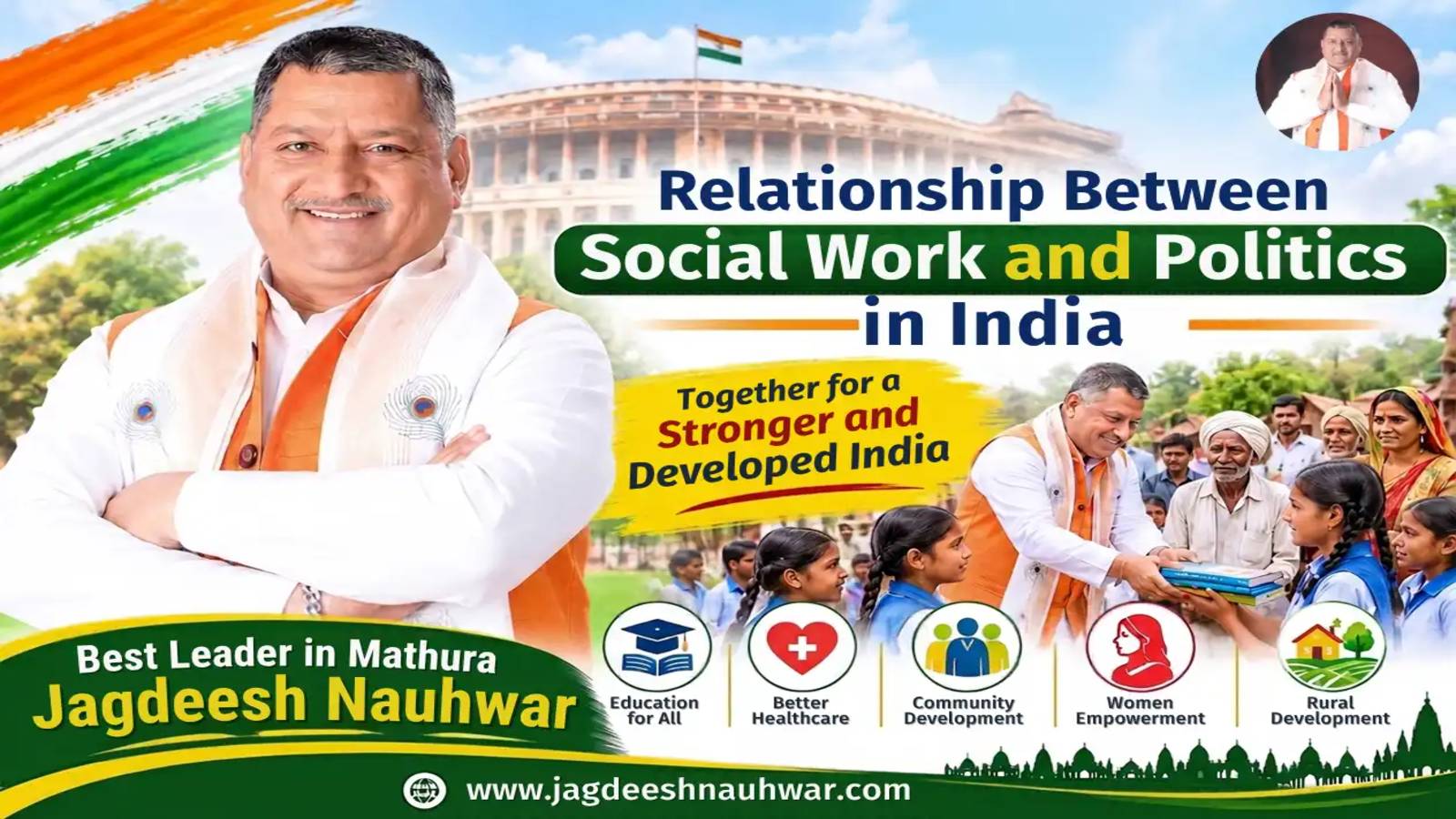
Relationship Between Social Work and Politics in India
Social work and politics are two important parts of society that play a significant role in improving people's lives. Although they have different approaches, both share a common goal: creating a better society. Social work focuses on helping individuals, families, and communities, while politics provides the policies, leadership, and government systems required to address social challenges.
In a diverse country like India, the relationship between social work and politics is particularly important. Issues such as poverty, unemployment, education, healthcare, gender inequality, and rural development require both community participation and effective political leadership. When social workers and political leaders work towards common objectives, they can create meaningful and long-lasting social change.
What Is the Role of Social Work in Indian Society?
Social work involves supporting people who face social, economic, and personal challenges. It focuses on improving living conditions, promoting equality, and creating opportunities for disadvantaged communities.
In India, social work plays an important role in several areas:
- Education: Supporting children, promoting girls' education, and improving access to learning opportunities.
- Healthcare: Creating awareness about health, hygiene, and medical facilities.
- Women Empowerment: Encouraging women's participation in education, employment, and community development.
- Poverty Reduction: Supporting underprivileged families through welfare initiatives and awareness programmes.
- Rural Development: Helping villages improve infrastructure, education, sanitation, and employment opportunities.
These activities strengthen communities and encourage people to participate in the development of their surroundings.
How Does Politics Support Social Work in India?
Politics provides an important platform for addressing social issues on a larger scale. Government policies, public welfare schemes, development programmes, and administrative decisions directly influence people's everyday lives.
Political leaders can support social development by identifying local problems, communicating citizens' concerns to the authorities, and encouraging effective implementation of welfare programmes.
For example, improving government schools, supporting healthcare facilities, developing village roads, and promoting employment opportunities require planning, public participation, and administrative coordination.
Social workers often understand community problems through direct interaction with residents. Political representatives can use this understanding to highlight issues and encourage appropriate solutions.
Therefore, social work identifies important community needs, while politics can help create the systems and opportunities needed to address them.
Five Important Connections Between Social Work and Politics
1. Education and Equal Opportunities
Education is one of the strongest foundations of social development. Social workers encourage families to educate their children, while political leadership can support better educational infrastructure and public policies.
Both efforts are important for improving literacy and creating opportunities for future generations.
2. Women Empowerment and Social Equality
Women empowerment requires awareness, education, safety, and economic opportunities. Social workers can encourage women to participate in community activities and understand their rights.
Political leadership can complement these efforts through effective policies and support for women's development programmes.
3. Rural Development and Community Welfare
Many rural communities face challenges related to roads, clean drinking water, sanitation, healthcare, and employment.
Social work helps identify these problems at the grassroots level. Political leadership can raise these concerns through appropriate administrative channels and support development initiatives.
4. Youth Development and Employment
Young people are important contributors to India's future. Social work initiatives can encourage skill development, education, sports, and community participation.
Political leadership can support opportunities for vocational training, entrepreneurship, and employment-oriented programmes.
5. Public Awareness and Citizen Participation
A strong democracy depends on informed and active citizens. Social workers help people understand their responsibilities and available welfare opportunities.
Political representatives can encourage public participation, listen to local concerns, and promote transparency in development activities.
You May Visit Also: What Can Make Rural Communities More Self-Reliant?
Why Does India Need Socially Responsible Political Leadership?
India needs leadership that understands the everyday challenges of ordinary citizens. Political leadership should not be limited to elections or public speeches. It should also involve listening to people, understanding local requirements, and working towards practical solutions.
A socially responsible leader gives importance to education, healthcare, women's development, youth empowerment, and rural progress.
For communities in Mathura and the Mant Assembly region, local development is closely connected with understanding people's needs and encouraging community participation.
The idea of best leader in Mathura Jagdeesh Nauhwar reflects the importance of leadership that values public service, social responsibility, and community development. Jagdeesh Nauhwar's public profile highlights themes such as education, social welfare, rural development, and community engagement.
Such themes demonstrate why the connection between social work and political leadership matters in building stronger communities.
How Can Social Workers and Political Leaders Work Together?
Social workers and political leaders can create better development opportunities by maintaining communication and focusing on community needs.
Some practical approaches include:
- Organising community meetings to understand local problems.
- Supporting educational awareness and student development initiatives.
- Encouraging participation in government welfare programmes.
- Promoting cleanliness, healthcare, and environmental awareness.
- Supporting women and young people through development activities.
- Identifying infrastructure challenges in rural communities.
- Encouraging cooperation between citizens, social organisations, and government authorities.
When these efforts are planned properly, they can contribute to sustainable community development.
Conclusion
The relationship between social work and politics in India is essential for creating an inclusive, developed, and socially responsible society. Social work brings communities together, identifies important challenges, and encourages people to participate in positive change. Politics provides opportunities to address these challenges through policies, governance, and public development initiatives.
Leaders who understand the importance of social welfare can make a meaningful contribution to their communities. The discussion around Best Leader in Mathura Jagdeesh Nauhwar also highlights the importance of public service, community engagement, and development-focused leadership.
Ultimately, the progress of India depends on collective efforts. When social workers, political leaders, and citizens work together, they can build stronger villages, improve educational opportunities, empower women, and create a better future for the next generation
