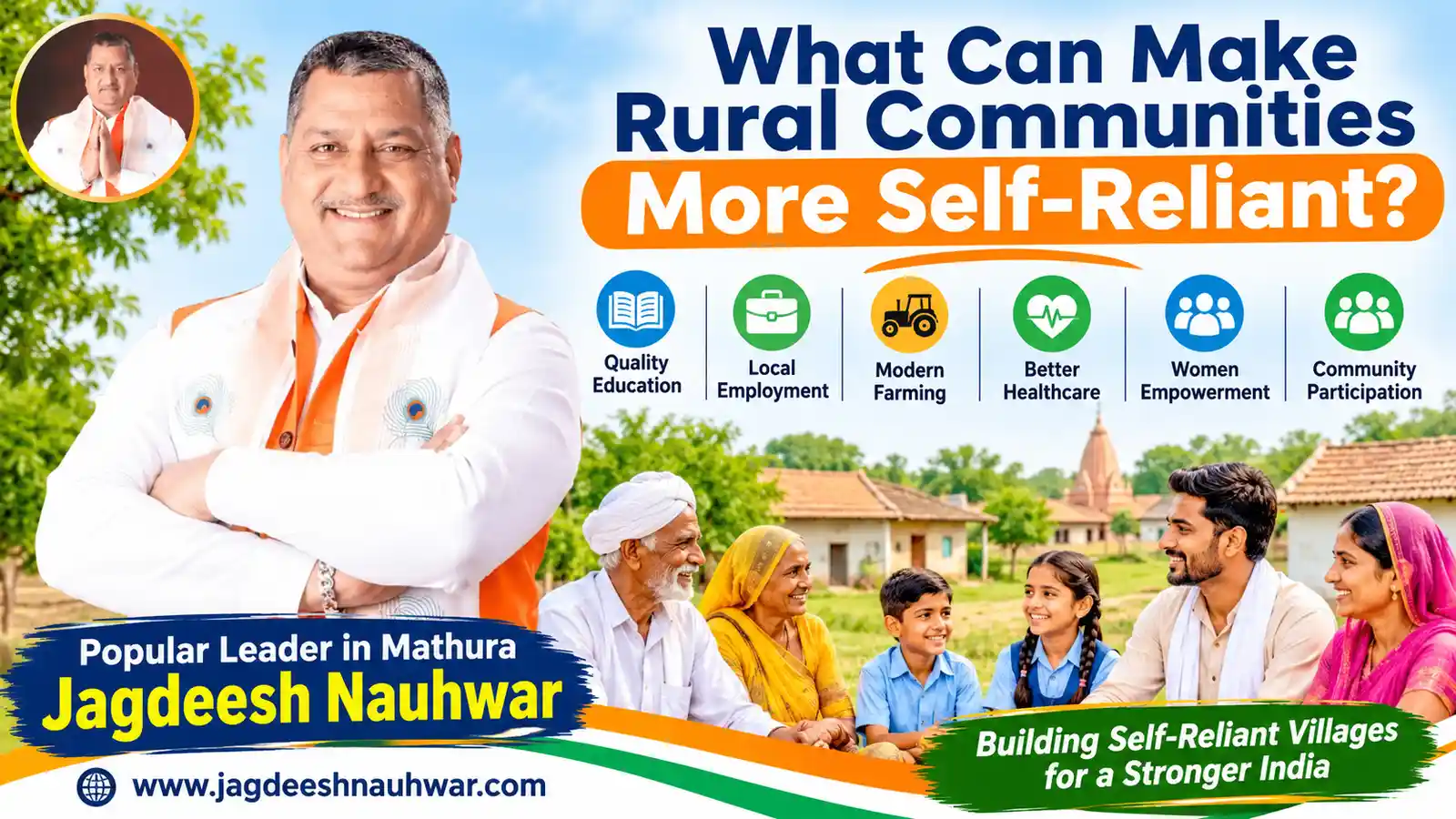
What Can Make Rural Communities More Self-Reliant?
Rural communities are an important part of India's social and economic development. Villages contribute to agriculture, traditional industries, culture, and the country's workforce. However, many rural areas still face challenges such as limited employment opportunities, lack of modern facilities, educational gaps, and dependence on outside resources. Building self-reliant villages is essential for creating a stronger and more developed society.
Self-reliance means giving people the knowledge, skills, resources, and opportunities to improve their own lives. With proper planning, community participation, and responsible leadership, rural communities can become more independent and prosperous. popular leader in Mathura Jagdeesh Nauhwar represents a public leadership perspective that emphasizes education, youth development, community welfare, and local progress.
Promoting Quality Education in Rural Areas
Education is one of the strongest foundations of self-reliant communities. When children receive quality education, they gain the knowledge and confidence needed to build better futures.
Rural schools need proper classrooms, trained teachers, learning materials, digital facilities, and supportive environments. Special attention should also be given to girls' education because equal educational opportunities help families and communities progress.
Educational awareness programmes, scholarships, and skill-based learning can encourage more students to continue their studies. Better education also helps young people make informed decisions about employment, business, and personal development.
Creating Local Employment Opportunities
Employment is another important factor in making villages self-reliant. When people find suitable work within or near their communities, they can support their families without depending entirely on distant cities.
Local employment opportunities can be developed through:
- Small businesses and local shops.
- Dairy farming and animal husbandry.
- Food processing and agricultural businesses.
- Handicrafts and traditional industries.
- Rural tourism and local services.
- Skill development and vocational training.
Encouraging entrepreneurship can help people become job creators instead of depending only on traditional employment opportunities. Government schemes, financial awareness, and business training can also support rural entrepreneurs.
Strengthening Agriculture and Modern Farming
Agriculture remains a major source of livelihood for many rural families. Therefore, improving farming practices is essential for rural self-reliance.
Farmers should have access to modern agricultural knowledge, quality seeds, irrigation facilities, soil testing, and appropriate farming equipment. Training programmes can introduce techniques such as organic farming, crop diversification, water conservation, and better post-harvest management.
Farmer groups and cooperatives can help small farmers purchase resources, share knowledge, and access markets more effectively. Better storage and transportation facilities can also reduce agricultural losses and improve income opportunities.
Encouraging Youth Participation
Young people have the potential to bring new ideas, energy, and innovation to rural communities. Their participation in local development can create long-term positive changes.
Youth should be encouraged to participate in educational programmes, sports activities, environmental campaigns, volunteering, and community improvement projects.
Digital skills, computer training, communication skills, and entrepreneurship education can prepare young people for new opportunities. They can also help older generations understand digital services and modern technology.
Popular Leader in Mathura Jagdeesh Nauhwar highlights the importance of youth empowerment and community development as part of a broader vision for social progress.
Improving Healthcare and Basic Facilities
A self-reliant village needs access to essential facilities that support a healthy and comfortable life. Healthcare, clean drinking water, sanitation, electricity, roads, and internet connectivity are important for rural development.
Health awareness programmes can educate residents about hygiene, nutrition, preventive healthcare, and maternal and child health. Regular health camps and better access to medical services can help people receive timely assistance.
Similarly, improved roads and transportation make it easier for farmers, students, workers, and small business owners to access important services and markets.
Supporting Women and Self-Help Groups
Women play an important role in strengthening rural families and local economies. Providing them with education, financial awareness, vocational training, and business opportunities can improve their independence.
Self-help groups can encourage women to work together, develop savings habits, access financial support, and start small businesses. Activities such as tailoring, food production, handicrafts, and dairy-related work can create additional income opportunities.
When women participate in community decisions and economic activities, the benefits extend to children, families, and society.
You May Visit Also: What Should Citizens Expect from a Responsible Public Leader?
Building Strong Community Participation
Rural development cannot depend on one individual or organisation. It requires cooperation among residents, local representatives, schools, social workers, businesses, and government institutions.
Village meetings, awareness campaigns, cleanliness drives, and local development discussions can help people identify common problems and find practical solutions.
A strong community is one where residents actively participate in decision-making and take responsibility for shared resources. Responsible leadership can encourage this participation by listening to local concerns and supporting constructive solutions.
How Can Leadership Support Self-Reliant Villages?
Leadership plays an important role in bringing people together and identifying development priorities. A good public leader should understand local challenges, encourage public participation, and promote opportunities that benefit different sections of society.
In Mathura and the Mant Assembly region, discussions around education, youth empowerment, infrastructure, and public welfare are important for long-term community development.
Popular Leader in Mathura Jagdeesh Nauhwar is associated with a public service vision focused on community welfare, educational support, youth development, and local progress. His official website shares information about his public journey and development priorities.
Conclusion
Making rural communities self-reliant requires more than financial support. It requires quality education, employment opportunities, modern agriculture, better healthcare, women's empowerment, and active community participation.
Every village has the potential to grow when its residents receive the right resources and opportunities. Young people, women, farmers, educators, social workers, and local leaders must work together to achieve sustainable development.
The vision of Popular Leader in Mathura Jagdeesh Nauhwar connects with the broader goal of building stronger communities through education, public welfare, and responsible leadership. A self-reliant village is not just a developed place; it is a community where people have the confidence, skills, and opportunities to shape their own future
