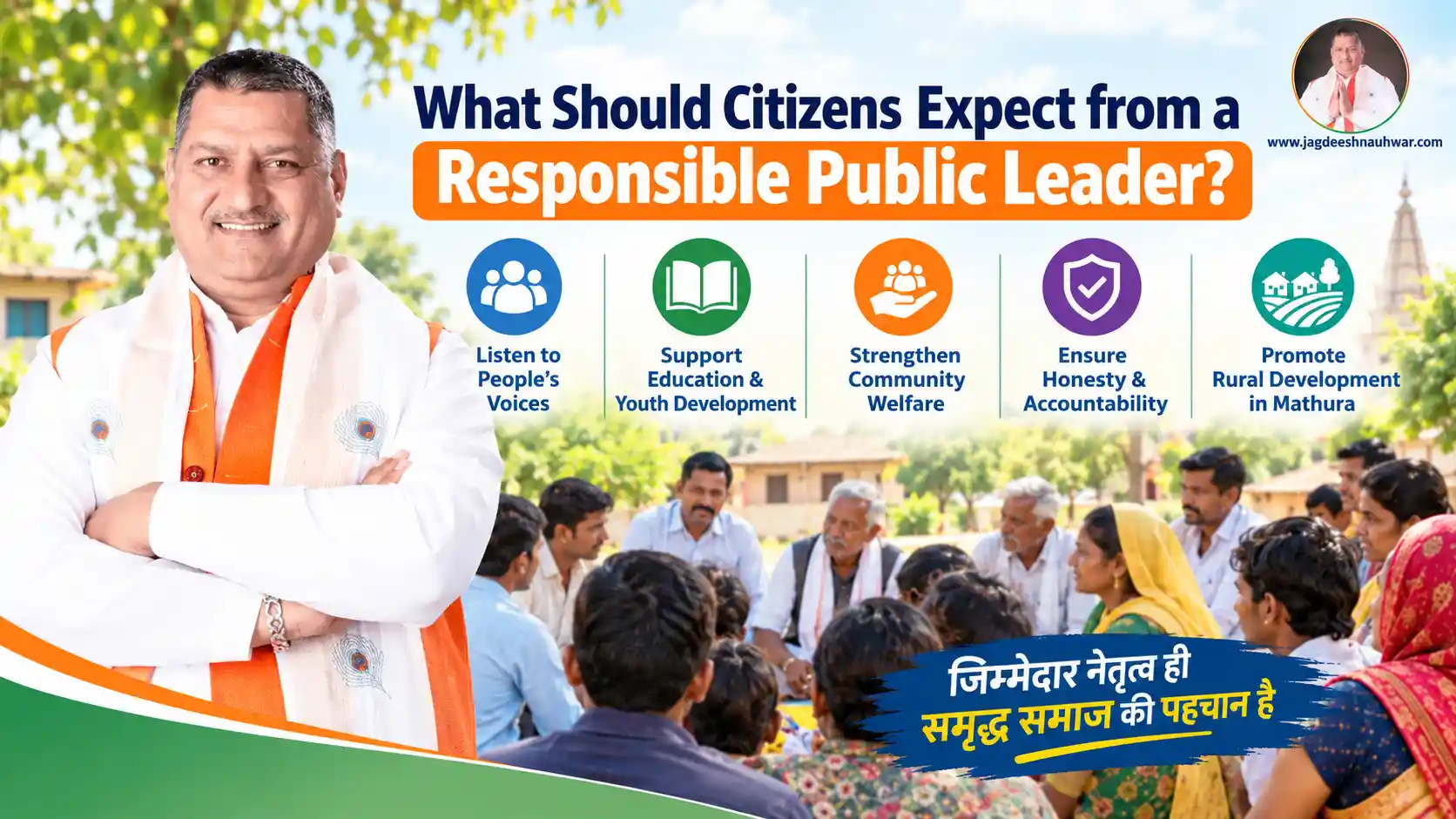
What Should Citizens Expect from a Responsible Public Leader?
A responsible public leader plays an important role in building a better society. Citizens expect their leaders to understand local problems, listen to public concerns, support education, encourage community development, and work honestly for the welfare of society. Good leadership is not only about holding a position; it is about accepting responsibility and making a positive difference in people's lives.
In communities such as Mant Assembly and the wider Mathura region of Uttar Pradesh, public leadership can help bring attention to local needs and development opportunities. Jagdeesh Nauhwar Public Leader is a relevant topic for understanding the values of public service, community participation, and responsible leadership.
Understanding the Needs of Citizens
One of the most important responsibilities of a public leader is to understand the everyday challenges faced by local residents. These challenges may include access to education, healthcare facilities, clean drinking water, better roads, sanitation, and employment opportunities.
Citizens expect their leaders to listen carefully before making decisions. Public meetings, community discussions, and direct interactions can help leaders understand people's priorities.
A responsible leader should also encourage citizens to share suggestions and report problems without hesitation. When community concerns receive proper attention, it becomes easier to identify practical solutions and support local development.
Promoting Education and Youth Development
Education is essential for social progress and long-term economic growth. Citizens expect responsible leaders to encourage educational opportunities for children, especially those from rural and economically disadvantaged families.
A public leader can support educational awareness, promote school participation, encourage girls' education, and highlight the importance of skill development. Young people also need opportunities to develop leadership abilities, communication skills, and confidence.
For a developing region like Mathura, investing attention in education and youth empowerment can help prepare the next generation for future opportunities. The work associated with Jagdeesh Nauhwar Public Leader can be discussed in this broader context of community welfare and the importance of helping young people build a brighter future.
Supporting Community Welfare and Social Work
A responsible public leader should understand that community welfare extends beyond infrastructure and public facilities. It also includes supporting vulnerable people, promoting social awareness, and encouraging cooperation among different sections of society.
Citizens may expect leaders to pay attention to the needs of senior citizens, children, disadvantaged families, and people who require assistance during difficult circumstances.
Community welfare can be encouraged through awareness campaigns, volunteer activities, educational initiatives, and coordination with relevant organisations. Leaders should also help people understand the appropriate channels for accessing available public services.
Social work becomes more effective when it focuses on genuine needs, respectful communication, and practical outcomes rather than promises alone.
Maintaining Honesty and Accountability
Trust is one of the foundations of responsible leadership. Citizens expect public representatives and community leaders to communicate honestly, explain their priorities, and take responsibility for their decisions.
A trustworthy leader should avoid making unrealistic promises or providing misleading information. Instead, they should explain what can be achieved, what challenges exist, and what steps may be needed to address a problem.
Accountability also means listening to criticism and responding constructively. When leaders provide clear information about their work and acknowledge areas that require improvement, they can build stronger relationships with the public.
For anyone exploring Jagdeesh Nauhwar Public Leader, honesty and accountability are important standards for evaluating the role and responsibilities of public service.
Encouraging Rural Development in Mathura
Rural development is an important priority for communities that depend on agriculture, local businesses, education, and essential public facilities. Citizens expect leaders to understand the needs of villages and support initiatives that improve everyday living conditions.
Important areas of rural development include:
- Better access to roads, transportation, and essential facilities.
- Greater awareness of education and healthcare services.
- Support for employment, vocational training, and youth opportunities.
- Improved sanitation and environmental awareness.
Leaders can help bring these concerns to the attention of the appropriate authorities and encourage constructive dialogue between residents and public institutions. Sustainable development requires realistic planning, cooperation, and continued attention to community needs.
Listening to People and Encouraging Participation
Responsible leadership should never be a one-way conversation. Citizens deserve opportunities to express their views, ask questions, and participate in decisions that affect their communities.
Public meetings and community gatherings can help residents communicate their concerns directly. They can also create opportunities to discuss local solutions, identify shared priorities, and encourage collective responsibility.
The public events featured on Jagdeesh Nauhwar's website include community interactions and discussions about local development. These topics illustrate why communication between leaders and residents is an important part of community-focused public service.
Meaningful participation helps leaders understand different perspectives and allows citizens to become active contributors to local progress.
You May Visit Also: Why Is Quality Education Important for Rural Children?
Building a Better Future Through Responsible Leadership
A responsible public leader should focus on long-term improvement rather than short-term attention. This means encouraging education, supporting social welfare, promoting community involvement, and helping identify solutions to local challenges.
Citizens should evaluate leaders through their conduct, transparency, accessibility, and commitment to public needs. Real progress often requires patience, collaboration, and consistent effort from residents, community organisations, and public institutions.
The idea behind Jagdeesh Nauhwar Public Leader connects with these broader expectations of community leadership in Mathura. By keeping public welfare, education, rural development, and citizen participation in focus, leaders can contribute to a more informed, inclusive, and connected society.
Conclusion
Citizens should expect a responsible public leader to be honest, approachable, accountable, and committed to community development. Listening to people, encouraging education, supporting vulnerable groups, and addressing local concerns are essential elements of meaningful public service.
In Mant Assembly and across Mathura, community progress depends on cooperation between citizens, leaders, and public institutions. Ultimately, responsible leadership is measured not only by words or promises but also by the sincerity of its efforts to understand public needs and support lasting social improvement.
