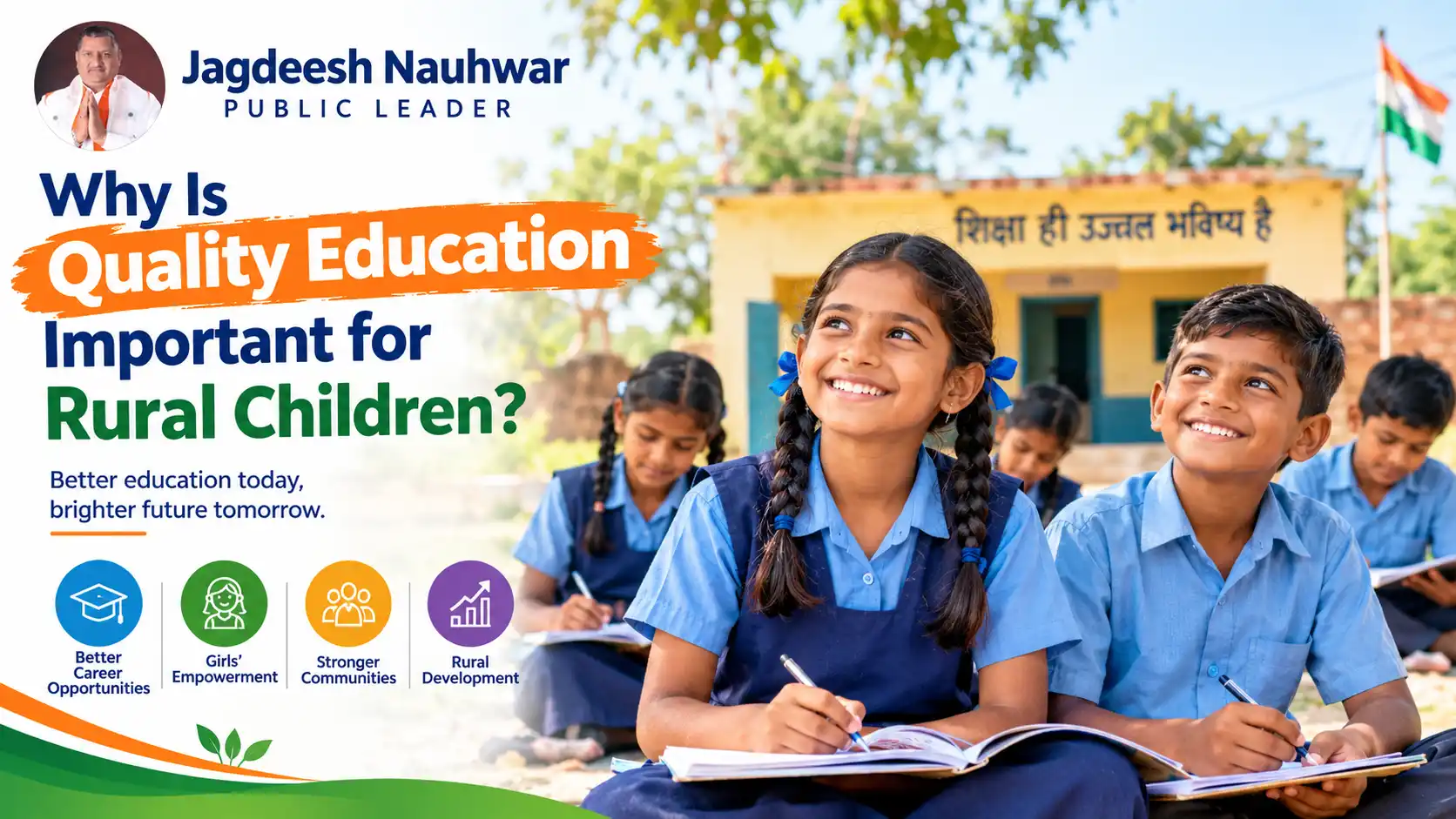
Why Is Quality Education Important for Rural Children?
Quality education is one of the most important foundations for building a better future for children and society. For children living in rural areas, education provides opportunities to develop knowledge, learn practical skills, explore career options, and improve their quality of life. Every child deserves access to good teachers, suitable learning facilities, and an environment where they can study confidently, regardless of their family background or place of residence.
In villages around Mathura and other parts of Uttar Pradesh, improving educational opportunities can help young people prepare for future challenges. Quality education is not only about passing examinations; it is about developing independent thinking, confidence, responsibility, and the ability to make informed decisions.
How Does Quality Education Improve Children's Future?
Quality education helps children discover their strengths and build the skills they need for further studies and employment. When students understand their lessons instead of simply memorising answers, they become better prepared to solve problems in everyday life.
A strong educational foundation can help rural children pursue careers in teaching, healthcare, engineering, technology, agriculture, business, and public service. It also helps them understand their rights and responsibilities as citizens.
Schools can support children's development by providing interactive lessons, libraries, sports activities, practical learning opportunities, and guidance about future careers. These experiences help students recognise that their ambitions can extend beyond the limitations of their immediate surroundings.
Why Is Education Important for Rural Development?
Education plays a significant role in the social and economic development of rural communities. Educated young people can contribute new ideas, improve local businesses, adopt modern agricultural practices, and participate in community initiatives.
For example, students who learn about digital technology may help their families access online information and essential services. Young people with financial literacy can make better decisions about saving, budgeting, and managing small businesses.
Quality education also encourages people to understand important issues such as sanitation, public health, environmental protection, and equal opportunities. As more children receive a strong education, communities can develop the knowledge and confidence needed to address local challenges.
What Challenges Do Rural Children Face in Education?
Although education creates valuable opportunities, some rural children face barriers that affect their learning and school attendance. These challenges can differ from one village to another.
Common difficulties include:
- Limited school facilities: Some schools need better classrooms, libraries, laboratories, toilets, and reliable electricity.
- Access to qualified teachers: A shortage of trained teachers or limited academic support can affect learning outcomes.
- Financial difficulties: Some families struggle to afford transportation, learning materials, and other education-related expenses.
- Digital inequality: Limited internet access and a lack of digital devices can restrict opportunities for online learning.
- Gender-related barriers: In some communities, girls may face additional challenges related to safety, household responsibilities, or continuing their education.
- Lack of career guidance: Students may not receive enough information about scholarships, vocational courses, competitive examinations, or higher education.
Addressing these barriers requires cooperation among schools, parents, local communities, education authorities, and social organisations. Every child should have a fair opportunity to learn and progress.
How Can Quality Education Support Girls in Rural Areas?
Girls' education is essential for creating stronger and more inclusive communities. When girls receive quality education, they gain knowledge, confidence, and greater opportunities to make decisions about their futures.
Educated girls can pursue professional careers, contribute to household income, understand their health and legal rights, and participate more actively in society. Their achievements can also encourage younger girls to continue studying and work towards their goals.
Parents and communities can support girls by ensuring safe travel to school, providing suitable sanitation facilities, discouraging discrimination, and encouraging continued education after secondary school.
Schools should create welcoming environments where girls can ask questions, participate in classroom activities, develop leadership skills, and pursue their interests without unnecessary barriers.
You May Also Visit: How Can Leaders Build Trust With the Community?
What Role Can Community Leaders Play in Improving Education?
Community leaders can help bring attention to educational needs and encourage cooperation between families, schools, and public authorities. Their contribution may include listening to parents, identifying gaps in school facilities, promoting awareness about educational opportunities, and encouraging students to remain in school.
Jagdeesh Nauhwar Public Leader is a relevant name in discussions about public leadership and community development in Mathura. From an education-focused community perspective, the broader role of public leadership is to encourage equal learning opportunities and support constructive dialogue about the needs of rural children.
Community leaders and social workers can also help families learn about available scholarships, school enrolment processes, educational programmes, and skill-development opportunities. Where specific needs are identified, they can raise concerns with the appropriate authorities and encourage practical solutions.
However, lasting improvement depends on collective responsibility. Teachers, parents, school administrators, local representatives, and government departments all have important roles in ensuring that children receive meaningful educational support.
How Can Schools and Parents Improve Learning Outcomes?
Improving rural education requires consistent efforts both inside and outside the classroom. Schools can focus on understanding what children have learned rather than measuring progress only through examination scores.
Practical steps include:
- Organising regular reading and mathematics activities.
- Providing access to books, libraries, and age-appropriate learning materials.
- Using digital resources where electricity and internet access are available.
- Holding parent-teacher meetings to discuss students' progress.
- Identifying children who need additional academic support.
- Encouraging sports, creative activities, teamwork, and critical thinking.
- Providing career awareness sessions and information about scholarships.
Parents can support learning by encouraging regular study habits, discussing school activities, celebrating progress, and communicating with teachers when their children experience difficulties.
In India, programmes such as Samagra Shiksha support efforts to improve school infrastructure, teacher development, inclusion, and educational access. Such initiatives are important parts of the wider effort to make quality education more equitable.
Conclusion
Quality education gives rural children the knowledge, confidence, and practical skills needed to build meaningful futures. It can improve career opportunities, strengthen families, support girls' empowerment, and contribute to the long-term development of villages.
For communities in Mathura and across Uttar Pradesh, educational progress requires more than school enrolment. Children need supportive teachers, suitable facilities, inclusive classrooms, guidance, and opportunities to develop their abilities.
By working together, parents, teachers, public representatives, and community organisations can help create an environment where every child has the opportunity to learn and succeed. Investing in rural education today is an investment in a more capable, confident, and prosperous society tomorrow.
